Navreh - An epitome of Kashmiri Culture
 |
||||||
|
Navreh
An epitome of Kashmiri Culture  Gopinath Raina |
||||||
|
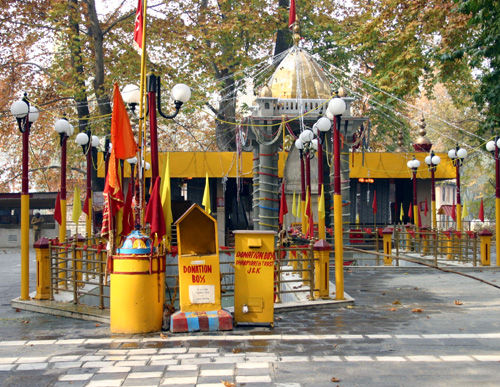
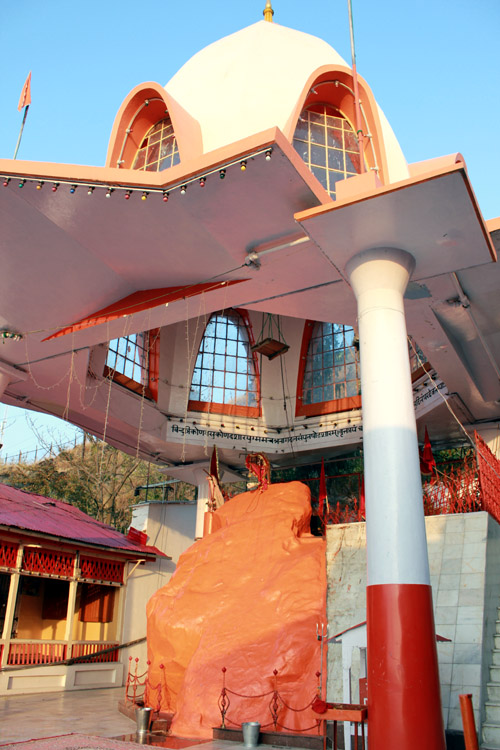
KP New Year Despite being rendered refugees in their own country, Kashmiri Pandits have retained their socio-cultural beliefs in the hope that their younger generations comprehend the essence of their culture. Festivals not only have deep religious overtones, they are also significant inasmuch as they provide us means of enjoying life, thus breaking the monotony of every day hum-drum life. Of the many festivals KPs celebrate, Navreh stands out as being the one that has shaped and guided our lives for centuries. As mentioned in Nilamat Purana and Rajatarangini, KP New Year (Navreh) is celebrated in Kashmir with great enthusiasm and fervor on the first day of the bright fortnight of the lunar month of Chaitra. It marks the onset of Spring and coincides with the first day of Chaitra Navaratri. This year, Navreh falls on April 11, 2013. Regarded as sacred as Maha Shivaratri by the Hindus of Kashmir, it is also the first day of the Sapta Rishi Samvat, 5087. It is this calendar that KPs generally use to celebrate their birthdays, anniversaries and all the religious rituals. In different parts of India, too, the first day of the lunar New Year is observed as "Ugadi or Yugadi" in Andhra Pradesh and Karnataka, as"Gaudi Padwa" in Maharashtra and Goa, as Cheti Chand by the Sindhis and in the northern parts of India as Chaitra Shukladi. Thaal Barun
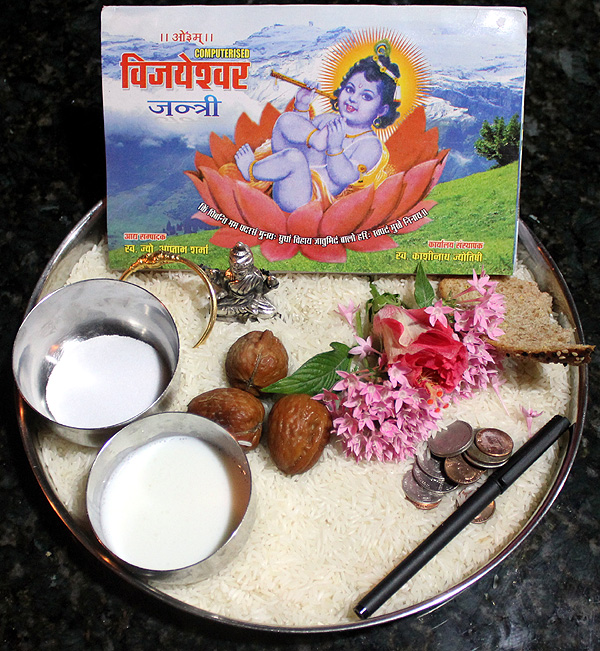
Early next morning, i.e. on the day of Navreh, usually the lady of the house or in some cases, particularly during my childhood, a boy or a girl would get up at dawn, have the first darshan of the thaal and its contents, and look into the mirror as the first thing. Then the thaal would be taken to all the members of the family, so as to enable them to see the decorated metal plate before seeing anything else. All the items on the thaal represent the items of our daily use, so very essential for day-to-day routine of life. This practice, known as thaal barun, signified the hope and the prayer that the New Year may bring wisdom and provide the family with prosperity, wealth, health and happiness for the coming year It was always considered auspicious to wear new clothes on such special occasions. Zanga Trai Closely associated with Navreh is the observance of the third day of New Lunar Year, called Zanga Trai. On this day, the ladies would visit their parents’ home to receive blessings for good luck and well-being. Even the community members would visit temples, parks and picnic spots to meet each other and have fun. It used to be an occasion of social get-together with men, women and children attired at their best. The 8th and 9th days of this lunar fortnight are observed as Durga Ashtami and Rama Navami respectively |
||||||
 |
||||||
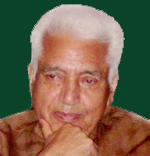 *A journalist by profession, a scholar by temperament and a writer by choice, Gopinath Raina was inclined to the study of religion from his very young age. It was Swami Vivekananda’s dynamic exposition of Hindu thought that fired his imagination while he was still at school, and by the time he entered college, he had been drawn to the writings of Gandhi, Aurobindo, Narayana Guru, Radhakrishnan and Bertrand Russel. *A journalist by profession, a scholar by temperament and a writer by choice, Gopinath Raina was inclined to the study of religion from his very young age. It was Swami Vivekananda’s dynamic exposition of Hindu thought that fired his imagination while he was still at school, and by the time he entered college, he had been drawn to the writings of Gandhi, Aurobindo, Narayana Guru, Radhakrishnan and Bertrand Russel.After retiring from Indian Information Service (I.I.S.) in 1983 where he distinguished himself as an editor, correspondent, commentator and administrator in All India Radio, he edited, AICC Journal, Varnika, (Jan.'84-Dec.'90), Koshur Samachar (March'91-Oct'95, Sanatana Sandesh,(1997-2005) and KASHEER (2003-2004), He has been writing profusely on various aspects of Hindu thought. He enjoys writing, particularly on saints and sages, not only of Kashmir, but of the other parts of India as well. Presently he lives in Miami, and spends his time writing personal memoirs. |
||||||
|
|
||||||
| Copyrights © 2007 Shehjar online and KashmirGroup.com. Any content, including but not limited to text, software, music, sound, photographs, video, graphics or other material contained may not be modified, copied, reproduced, republished, uploaded, posted, or distributed in any form or context without written permission. Terms & Conditions. The views expressed are solely the author's and not necessarily the views of Shehjar or its owners. Content and posts from such authors are provided "AS IS", with no warranties, and confer no rights. The material and information provided iare for general information only and should not, in any respect, be relied on as professional advice. Neither Shehjar.kashmirgroup.com nor kashmirgroup.com represent or endorse the accuracy or reliability of any advice, opinion, statement, or other information displayed, uploaded, or distributed through the Service by any user, information provider or any other person or entity. You acknowledge that any reliance upon any such opinion, advice, statement, memorandum, or information shall be at your sole risk. |
||||||
 ormally, we like certain things more than others. Some of us may like to play rather than just sit and gossip; some others may like to utilize their time in studies and not waste it in sleep or useless pursuits. Thus, all of us have different values for different things.