When Language fails

|
|
Sunanda Vashisht 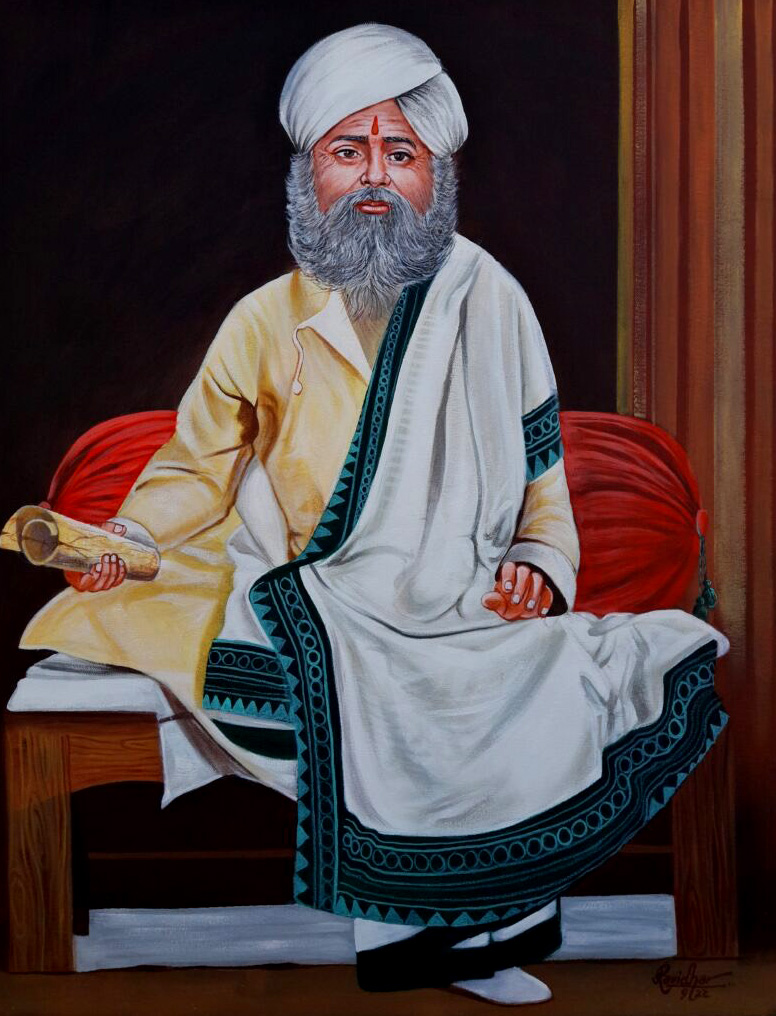
Jonaraja was a Kashmiri historian and Sanskrit poet. His Dvitīyā Rājataraṅginī is a continuation of Kalhana's Rājataraṅginī and brings the chronicle of the kings of Kashmir down to the time of the author's patron Zain-ul-Abidin.
|
| Genocide survivors can rarely recall the precise moment when they become part of perpetrator’s genocide project. Since genocide is a lengthy process, it is impossible to pinpoint an exact time when the tyranny starts. By the time the victim realizes they have become victim, there is usually no escape. A cloud of denial overpowers the victims. Moreover, their memories do not develop in a chronological order. They accurately remember the last meal they ate before their world came crashing down, the last kind smile they got from a stranger, the last happy story they heard before their nightmare began. These memories they articulate with utmost precision. After that, memory is both a punishment and a necessity. Often we find genocide survivors fall silent or become incoherent. That does not happen because their memory fails them. It happens because language fails them. Genocide survivor’s memory is a legacy that needs to be preserved and more importantly chronicled accurately. Hence Jonaraja Institute of Genocide and Atrocities Studies was visualized as an attempt to preserve memories of genocide as legacies. When language fails, JIGAS picks up the threads and presents them as a powerful testament of the unspeakable horror of genocide. The importance of chronicling cannot be overstated. The memories of genocide survivors not only become important historical documents, they also shape the identities of future generation of genocide victims. Genocide does not suddenly confront us. No genocide is ever sudden. Identity conflict sets it up, escalating from anything ranging between social tension to political instability and ultimately to targeted mass murder. Identity is the collection of qualities and attributes that characterize an individual and shape how they view themselves. It is a multifaceted idea that encompasses numerous facets of a person's or a group's sense of identity. There are many different kinds of identity. Personal identity refers to the distinctive traits and characteristics that set one person apart from others. Personality traits, preferences, experiences, and personal history are all components of one's identity. The groups that a person identifies with and belongs to comprise their social identity. These divisions may be made on the basis of traits like socioeconomic class, gender, ethnicity, nationality, and others. Social identity frequently affects how people interact and react to one another. A cultural group's shared ideas, values, customs, languages, and activities are referred to as its cultural identity. It significantly influences how someone perceives the world and moves through their environment. The feeling of belonging to a particular ethnic group is referred to by the term "ethnic identity," which is closely related to "cultural identity." It takes into account elements like shared ancestry, history, language, and cultural customs. A person's affiliation with a specific nation or country is referred to as having a national identity. It frequently entails a sense of allegiance and devotion to the history, culture, and ideals of the country. A person's association with a particular religion or belief system is a key component of their religious identity. It can affect someone's moral convictions, sense of purpose, and values. In the modern era, digital identity has become increasingly relevant. It encompasses how individuals present themselves online, including their social media presence, online activities, and virtual interactions. These different types of identity are interconnected and can overlap, creating complex and multifaceted senses of self. It's important to recognize that identities are not fixed and can evolve over time based on personal experiences, interactions, and societal changes. When identity becomes a central aspect of a person's or group's sense of self, it can have both positive and negative impacts on conflict dynamics. Identity can become a significant factor in driving and shaping conflicts. While it can exacerbate tensions and contribute to violence, it can also be a source of resilience, unity, and a foundation for building inclusive societies. Understanding the role of identity is crucial for addressing the root causes of conflicts and fostering sustainable peace. Genocide studies confirms that genocide frequently targets certain groups based on identification traits like ethnicity, religion, nationality, or other cultural or social qualities. There is a definite connection between genocide and identity. In numerous respects, identity is crucial to the processes of genocide: Targeted Groups: Genocides usually aim to wipe out or severely weaken particular identity-based groups. These groups can be categorized according to their ethnicity, religion, race, or nationality. These groups are seen as distinct by the offenders or as a danger to their own identity or dominance. Dehumanization: Genocide perpetrators frequently use dehumanizing language and behavior to present the targeted people as less than human. This makes it simpler for them to defend the atrocities and violence carried out against the group. Divisive Propaganda: Inflaming identity conflicts frequently entails disseminating information that paints one group as a danger to the life or well-being of the other. To incite fear and hatred, this can involve emphasizing past wrongs, employing insulting language, and disseminating misleading information. Identity as a Motive: Conflicts and divisions stemming from one's identity can serve as a catalyst for genocides. These distinctions can be used to argue for the eradication of a particular identity, whether it be because of historical grievances, geographical disputes, or ideological motivations. Identity as a Marker: Members of the targeted group can be recognized by identity markers like ethnicity, religion, or language. This makes it simpler for the offenders to identify and track down members of that group to persecute. Cultural Erasure: Genocides frequently involve the eradication of culturally significant landmarks, organizations, and customs related to the targeted identity. Any traces of the group's identity and history are meant to be completely erased. Forced Assimilation: Genocidal acts can include efforts to compel members of the targeted group to adopt the dominant identity. This could entail imposing a different religion, forbidding the use of their language, or changing cultural norms. Identity Long-Term Effects: Genocide survivors' and their descendants' identities may be profoundly and permanently altered. Trauma, displacement, and the loss of cultural legacy can all have a profound effect on how people and communities view themselves. In this edition of Pavak we will take a deep dive into the interplay between genocide and identity and why understanding of identity and classification is important to understand genocide. When communication breaks down and diplomatic efforts fail, the likelihood of violence increases. Absence of platforms for meaningful dialogue and mediation can make it difficult to address grievances and find non-violent solutions. Preventing identity conflicts from escalating into genocide requires a multifaceted approach, involving diplomacy, education, awareness campaigns, international cooperation, and efforts to promote tolerance and understanding among different groups. Genocide Studies today has become a highly politicized and polarized discipline. Not every genocide receives the attention of global community. Genocides that have happened in the eastern hemisphere have often been dismissed as mass violence or cultural flaw. Genocidal crimes have been hidden and perpetrators have been made heroes. As long as western lens is used to study all genocides, the discipline of genocide studies will remain deficient, unfair and incomplete. JIGAS is an important addition to the world of genocide studies. It gives a platform to those scholars who are working to bring much needed recognition to forgotten genocides. JIGAS presents the snapshots of their academic, peer reviewed research papers and conversations with them. JIGAS is a journey of purification and self-awareness. It is a journey of denying the denial of genocide. It is a platform of safe spaces for speaking up. It is a journey towards a world where no genocide is ignored and potential genocides can be prevented in time. |

|
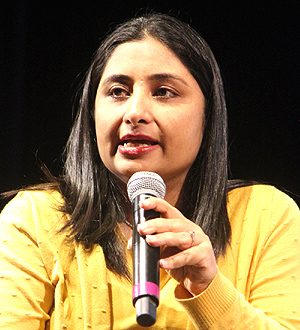 Sunanda Vashisht is a writer, political commentator and a columnist. She writes for several news portals and has been a columnist for Daily News and Analysis (DNA), India based newspaper published from Mumbai, India. Currently she writes exclusively for First Post. Her bylines have appeared in Houston Chronicle, Denver Post, Indian Express, Economic Times, Swarajya, MyIndMakers and many others. Her area of focus has been conflict ridden state of Jammu and Kashmir and she has written extensively covering all aspects of conflict that is considered the most volatile region of South Asia. In 2019, she represented the Kashmiri Pandit voice and addressed the human rights situation in Kashmir at the US Congress' Tom Lantos Human Rights Commission. In a testimony that went viral, she was the first to talk about Kashmiri Pandits and their genocide in US Congress. Sunanda Vashisht travels extensively around the world speaking about Kashmiri pandits and their plight. She is chairperson of Jonaraja Institute of Genocide and Atrocities Studies.
Sunanda began her podcasting journey with popular weekly podcast called, MyIndPodcast. It is a first and only weekly podcast of its kind devoted to Indian and Indo-American issues. Currently she hosts Epicenter podcast series that has successfully completed two seasons. |
|
|