Kashmiri Pandits Unyielding, Unforgotten, and Undeniable

|
|
Unyielding, Unforgotten, and Undeniable Esha Salman |
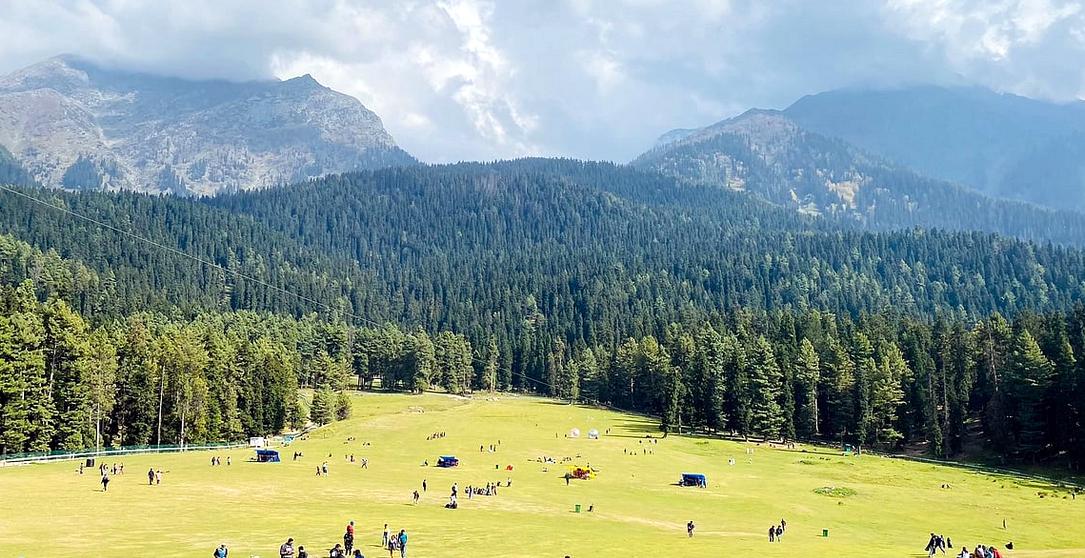
| Why do our voices not matter? Why do our stories, which are hidden beneath layers of trauma, silence, and endurance, continue to remain buried, unrecognized, and uncompensated? These are the questions Kashmiri Pandits have been asking for over three decades. Thirty-six years have passed since the forced exodus of 1989-1990. Thirty-six years since homes were left behind in the stillness of the night, since temples were desecrated, since a people were turned into refugees in their own country. Yet even after such erasure, the Pandit community has refused to be extinguished. That refusal to be extinguished is what drew me, with heartbreak and clarity, to write this piece. One month ago, the brutal massacre in Pahalgam where over 27 innocent lives were stolen in a horrifying act of terror, ripped through my sense of security. It jolted memories I never lived, but somehow have always carried. As a Kashmiri Pandit born thousands of miles away from Kashmir, I did not flee in 1990, but the terror of that night revisited us all with this attack. What made this unbearable wasn’t just the violence, it was its familiarity. I was in Pahalgam last year, walking those same roads, inhaling the same air. That could have been me. That could have been any of us. This is why it matters. Because thirty-six years later, the blood is still being shed, and the silence is still deafening. This is not justice, this is a cycle we are still trapped in. And someone must speak. It is not the geography that defines the resilience of the Kashmiri Pandit people, but rather our unyielding spirit, that quiet, burning will that has produced scholars, scientists, poets, lawyers, and diplomats. Our survival has not been forged in vengeance, but rather in values, and among the most extraordinary embodiments of that legacy today is India’s Foreign Secretary Vikram Misri. In the wake of Pahalgam, as I searched for clarity amid grief, I kept returning to one name: Vikram Misri. He is more than a diplomat, he is a quiet revolutionary. In a time when the world often forgets us, his presence at the highest levels of diplomacy is a reminder that we are not gone. We are still here. We still serve, still lead, and still stand. I chose to focus on Misri not only for his professional stature, but because he embodies what it means to channel pain into purpose. He’s someone who, even while being viciously trolled, doxxed, and personally attacked, chose restraint and courage. That’s what being a Kashmiri Pandit means. That is our legacy. It is not one of revenge, but one of resistance, and Misri carries that resistance with dignity. Misri’s journey from a child in conflict-ridden Kashmir to one of the highest offices in Indian diplomacy is not merely a professional ascent, but it is a reclamation of voice, dignity, and Kashmiri Pandit identity itself. His recent role in the India-Pakistan ceasefire following Operation Sindoor positioned him at the heart of India’s foreign policy machinery, and simultaneously, under vitriolic fire. Misri was brutally trolled online. His daughter was subjected to misogynistic abuse, and personal photos were circulated with cruel intent, all because he pursued diplomacy over destruction. Let us be clear: this kind of digital lynching is not just an attack on a person, but it is an attack on a community’s dignity. The vilification of Vikram Misri is symptomatic of a society that too often mistakes peace for weakness and views empathy as betrayal. But in truth, it is far braver to wield words over weapons, and to choose dialogue even when your own people bleed. But what followed was not retreat, it was resilience. Standing by him was another trailblazing figure, Kiran Bedi, India’s first female IPS officer and a lifelong civil servant who fearlessly called out the "faceless, nameless" mobs with an open letter that echoed far beyond headlines. Her words cut through the noise, painting Misri as what he truly is: “A quiet symbol of an entire people who refused to be erased.” In Misri’s strength, I see a map back to my roots of one not one drawn with borders, but with courage. As someone who has dedicated my life to advocacy, to amplifying silenced voices, and to standing for displaced peoples across the world, his story resonates because it is mine too. I may never hold a government office or negotiate ceasefires, but I advocate in my own way through articles like this and in carrying a name that still aches for a homeland. Bedi’s reflection was not just a tribute to Misri, but it was a eulogy for all the stories we’ve never heard, and a resurrection of those we’ve forgotten. She reminded India, and the world, of what it means to be a Kashmiri Pandit: to rise from ashes not with protest or revenge, but with “books, belief, and backbone.” This struck a deep chord within me. I am 19 years old. I was born in the United States, thousands of miles away from Srinagar’s chinar trees and temple bells, and I was not there in 1990. I did not flee in the dead of night, but I still carry that exile within me. It runs through my veins, in my grandparents’ silences, in my parents’ aching nostalgia, and in my own search for identity across two homelands. Being a Kashmiri Pandit-American means being born into inherited trauma and inherited strength. It means understanding that displacement is not only physical, it’s generational. That duality of loss and legacy has become my mission. I don’t write from a place of distance, even if geography might suggest so. I write from a place of inherited longing, from a generational duty to remember and resist. My identity as a Kashmiri Pandit-American is not just personal, rather it is political, spiritual, and ancestral. It demands of me to not let the past slip quietly away. We may not all return to Kashmir, but we will carry it forward. And yet, every time I see someone like Vikram Misri speak on global platforms, carrying himself with poise in the face of vitriol and politics, I see a mirror not of my face, but of my community’s soul. When I hear about how he entered the Indian Foreign Service in 1989, the very year our people were uprooted, and how he climbed the ranks not through power grabs but through quiet integrity, I am reminded that the Pandit story is not just one of loss. It is one of quiet revolution. Misri has advised three Indian Prime Ministers: Gujral, Manmohan Singh, and Narendra Modi. He has served in Sri Lanka, China, Spain, and Myanmar. He has stood as India’s ambassador, strategist, voice, and defender. Most recently as Foreign Secretary, he anchored the Indian government's messaging after the Pahalgam terror attacks, choosing restraint over rhetoric and diplomacy over destruction, knowing fully that peace requires courage too. Figures like him remind us that Kashmiri Pandits are not a relic of the past, but torchbearers of India’s future. In a time when identity is often politicized and weaponized, Misri’s example shows what it means to represent without resentment in order to transform personal pain into national purpose. What we need now more than ever is acknowledgment. Not just of pain, but of presence. The Kashmiri Pandit community is not asking for pity, rather we are asking for recognition and accountability for a future where our identity is not filtered through tragedy, but through our contributions. If we are to ever stop repeating the cycle of Pahalgam, of 1990, and of exile and silence, we must elevate stories like Misri’s not simply to idolize, but to humanize. He is proof that silence can give way to service, that endurance can shape policy, and that our community is not a historical footnote, but a living narrative still being written. Kiran Bedi’s decision to speak out carries immense meaning. A pioneer in her own right, as a former Lieutenant Governor of Puducherry and India’s first woman in uniformed service at her level, she understood what Misri’s story truly signifies: the rise of a silenced people. Her words were not just support, they were validation and acknowledgment. It showed us that finally, someone was listening. There are stories history forgets, not because they lack tragedy, but because they are too dignified to scream. The story of the Kashmiri Pandits is one such story. But we are no longer quiet. As someone who has found purpose in advocacy for displaced peoples, for survivors of violence, and for those whose histories were denied or erased, I carry my Pandit identity with defiance and dignity. I do not scream to be heard, but I speak to be remembered. I uplift the stories of my community not as trauma tales, but as testaments to survival. Kashmiri Pandits were scattered, yes, but we are not shattered. We were silenced, but we are not forgotten. And as long as people like Vikram Misri and Kiran Bedi continue to stand tall in the public square refusing to be erased, we too will rise. Not with guns. Not with hatred. But with knowledge. With belief. With backbone. And now, it is time for the world to listen. To the victims of Pahalgam, we owe remembrance. To our ancestors, we owe truth. And to ourselves, we owe action. Speak their names. Share their stories. Demand justice. And above all, refuse to let silence settle. We may be dispersed across continents, but our spirit remains united: unyielding, unforgotten, and undeniable |
|

|
 *Esha Salman, a teenage Kashmiri Pandit who loves to write. An avid learner with a deep interest in the arts – specifically in learning Indian classical dancing and singing. Interested in current events and philosophical debates that challenge me to think critically about the world and the way it is currently evolving.
 |
|
|