Essential Nutrients for Our Bodies

|
|
Essential Nutrients for Our Bodies
|
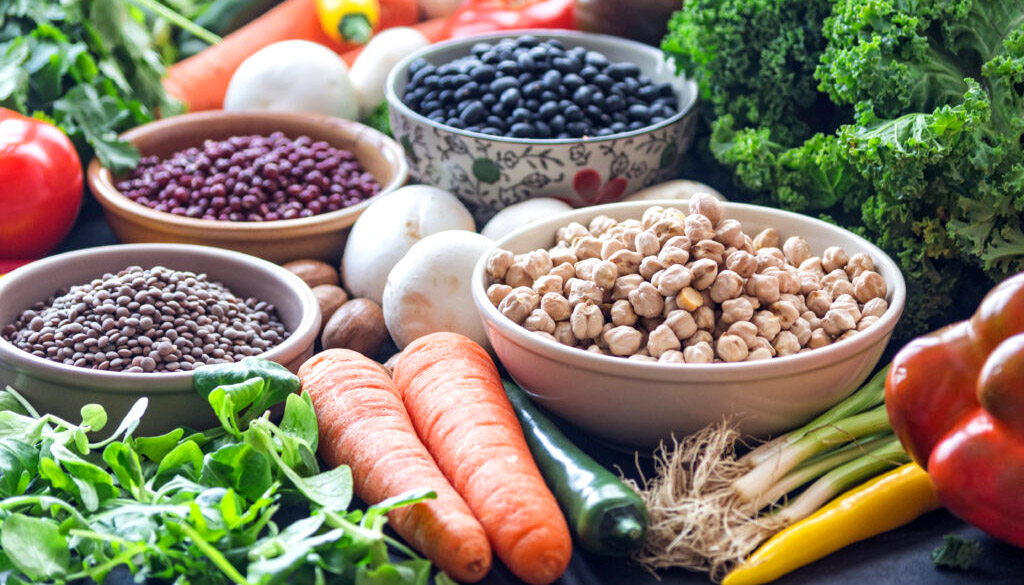
| About thirty vitamins and minerals are necessary for our bodies to function. Food gives us energy, but just as important, it delivers vitamins and minerals. There is essentially no bodily function that doesn’t depend on at least one of these compounds, roughly thirty of which are considered crucial. They help our hearts beat and our lungs breathe. They enable our bodies to build new muscles, skin and bone cells. They allow nerves to send signals to the brain and the immune system to fight invaders. We literally can’t live without them. The difference between vitamins and minerals is that the former are organic --- made by a plant or animal --- and the later are not. We absorb vitamins directly from the plants and animals we eat. We get minerals, which come from rocks, dirt or water; sometimes from the environment and sometimes from living things we eat that absorbed them before they died. There is variation in how we all consume, digest, absorb and utilize the nutrients in a particular food we are eating. Water-soluble vitamins: These are the vitamins that can dissolve in water: Vitamin B (Thiamin); B2 (Riboflavin); B3 (Niacin, nicotinamide; B5 (Pantothenic acid); B6 (Pyridoxine, pyridoxamine; B7 (Biotin), B9 (Folate, folic acid ; B12 (Cobalamin, cyanocobalamin); Vitamin C (Ascorbic acid). Water soluble: (Choline); Vitamin A (beta-carotine converts to Vitamin A. Vitamin D: Calciferol, cholecalciferol (Vitamin D3) ; ergocalciferol (Vitamin D2); Vitamin E: Alpha-tocopherol. Fat-soluble Vitamins: These organic nutrients dissolve in fats and oils and are mostly found in fat tissue and the liver. Vitamin K has K1 and K2, called Quinones. Major minerals: Calcium, Chlorides, Magnesium and Phosphorus are the major minerals that the body needs relatively in large amounts, although too much of one can sometimes block the absorption of another. Trace minerals : Only small quantities of these trace minerals like potassium, sodium, sulfur, chromium, copper, fluoride, iodine, iron, manganese, molybdenum, selenium and zinc are essential as the major minerals. General function of essential nutrients : Although listed above are the main known uses of different nutrients, yet the scientists suspect that there may be many that are undiscovered till date. Furthermore, vitamins and minerals often interact with one another and help to promote the reactions of other nutrients, more useful to our human systems. Prevention of Cancer: Nutrition is the ultimate medicine to look after our eyes and general health. Certain nutrients specifically support our overall eye health. Our blood delivers nutrients all over our body, including to our eyes. As such, heart healthy foods are essential for our overall organ function. Eating a diet rich in vegetables, fruits, beans, and whole grains, have many positive effects. Green leafy vegetables have many types of phytochemical nutrients that can reduce body inflammation; hence be protective against malignant growths. In a research study it was found that women who ate beans or lentils twice a week had a lower risk of developing breast cancer, than those who hardly ate once a month.  All kinds of fruits consumed regularly have been assigned with lower risk of prostrate and lung or breast cancers. Highly processed foods, including red meat, are reported to generate compounds that are potentially carcinogenic.
 Pumpkin is normally fiber-rich and packed with vitamins A, C, E, and K. Pumpkin seeds are a great source of protein, fiber, and the useful zinc, not found in common daily-use vegetables. Legumes, such as lentils (beans and ‘daal’) are rich in folate, iron, and most of the B vitamins that support the gut-micro-biome functions for digestive processes inside, for overall digestion. Fermented soybean too is highly useful for our gut health via good bacteria introduction. In nutshell, for our overall wellness amidst middle age or beyond, one can follow a few easy norms, as under: Avoid smoking. Reduce obesity as 7-8 percent of cancer cases are linked to obesity. Limit alcohol consumption to the minimum as 5.4 percent of the cases are linked it. Limit daily Sun exposure to an hour or so. Eat healthy, avoiding a daily red-meat indulgence. Leave the rest to His discretion ! |

|
 Dr. Tej K.Munshi, {Ex. Prof. in Applied Sciences},
Feedback at: tejmunshi@gmail.com Newyork, Phone No: 518-374-7036 |
|
|