| Preamble:
Bhairava in the Bhairava Tantra of Kashmiri Shaivism, holds an important tradition in the aboriginal Hindu community. Bhairavas are mainly manifested as “Eight Bhairavas” also known as Asht Bhairavas. They guard and control the eight directions. Each Bhairava has eight sub Bhairavas under him, which constitute sixty-four in numbers. Also many other sub Bhairavas have been manifested which protect various other places in Kashmir. Those Bhairavas are distributed and regarded as the protectors of their own realm in the various parts of Kashmir.
The Asht Bhairavas of Srinagar are:
- 1. Anandeshwar Bhairava, Maisuma, Lal Chowk
- 2. Mangaleshwar Bhairava, Namchibal, Fateh Kadal
- 3. Hatkesvara Bhairava (Mahakal), Malakhah, Nowhatta
- 4. Purnaraza Bhairava, Hari Parbat
- 5. Turskaraja Bhairava, Narsingh Garh
- 6. Sheetaleshwara Bhairava, Sathu
- 7. Bahukesteshwara Bhairava, Chattabal
- 8. Vetalraza Bhairava, Rainawari
 Devraz Bhairava Nunar:
He is one of the Sixty Four Bhairava and is the Ishta Bhairava and the guardian of Nunar area. He is considered as the Raaza, which means the Lord of the area. Our ancestors used to say that the pilgrimage of Amarnath Yatra was considered fruitful only when one had a darshan of Devraz Bhairava on the return via Baltal route. It is also believed that Bhairava evolution happened to accompany Maa Shakti in her battles of destruction against the evil forces. Devraz Bhairava in Nunar is the one of those to safeguard Maa Bhawani of Tulamulla. Similar to the Eight Bhairavas who are established to safeguard Maa Sharika in Srinagar.
Place of Manifestation:
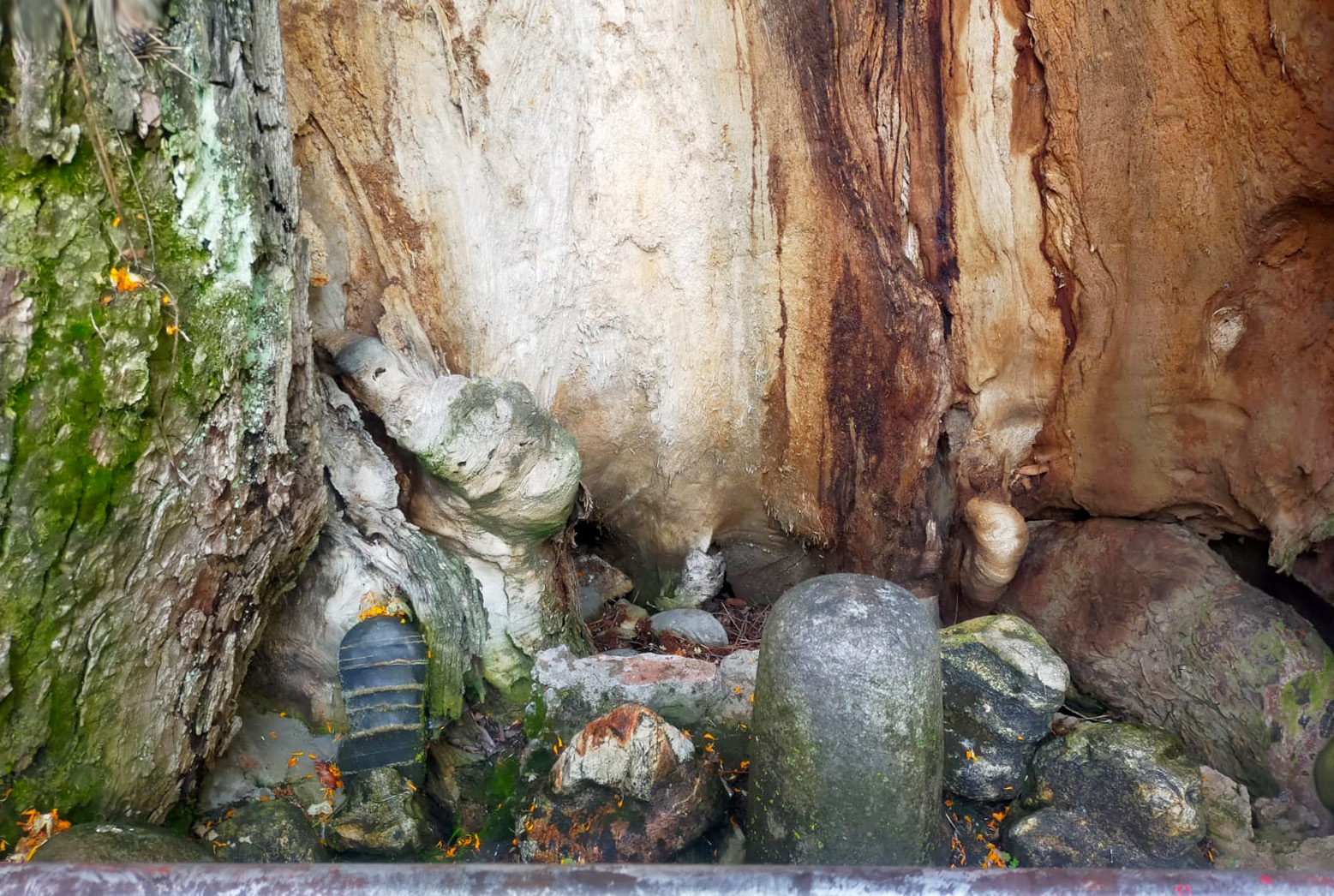
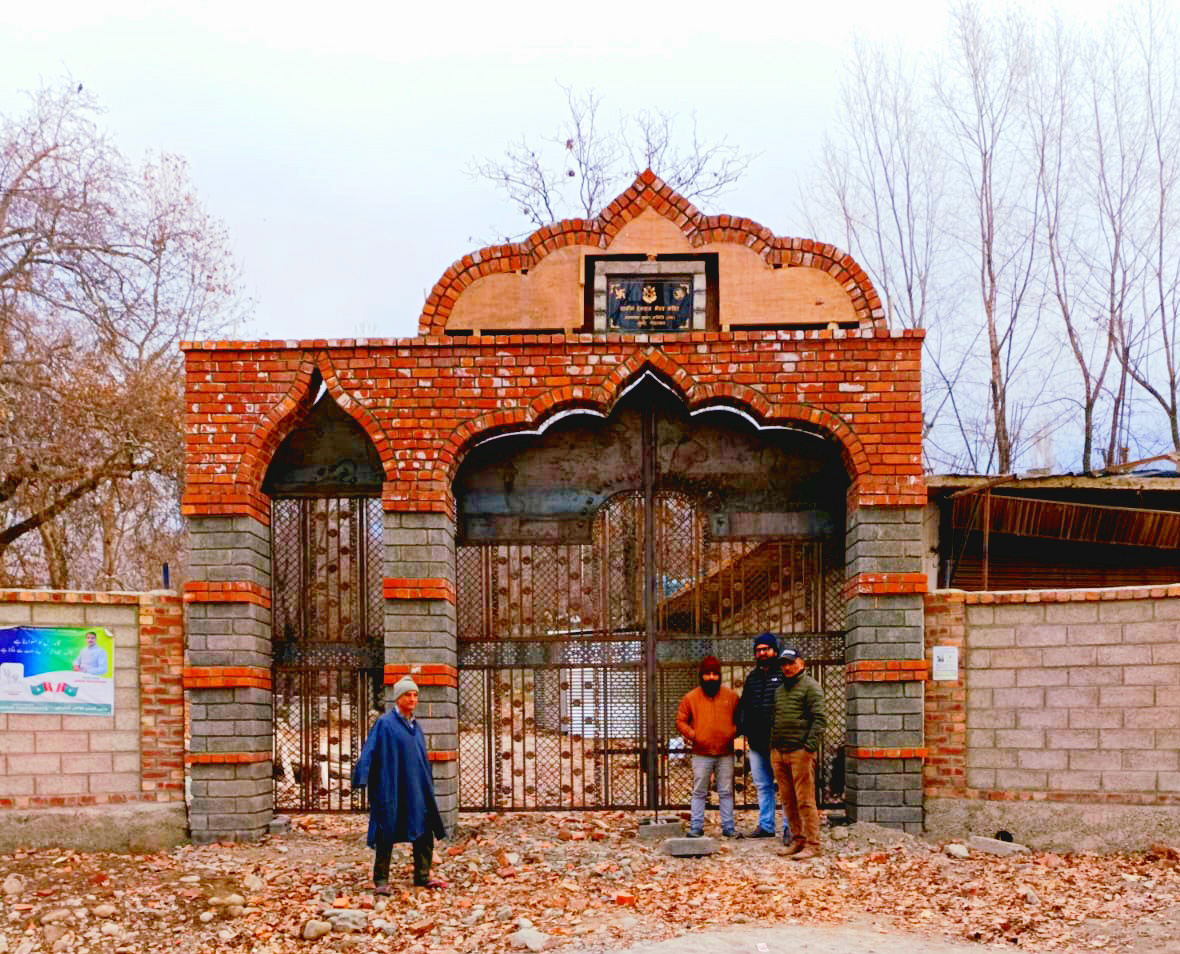
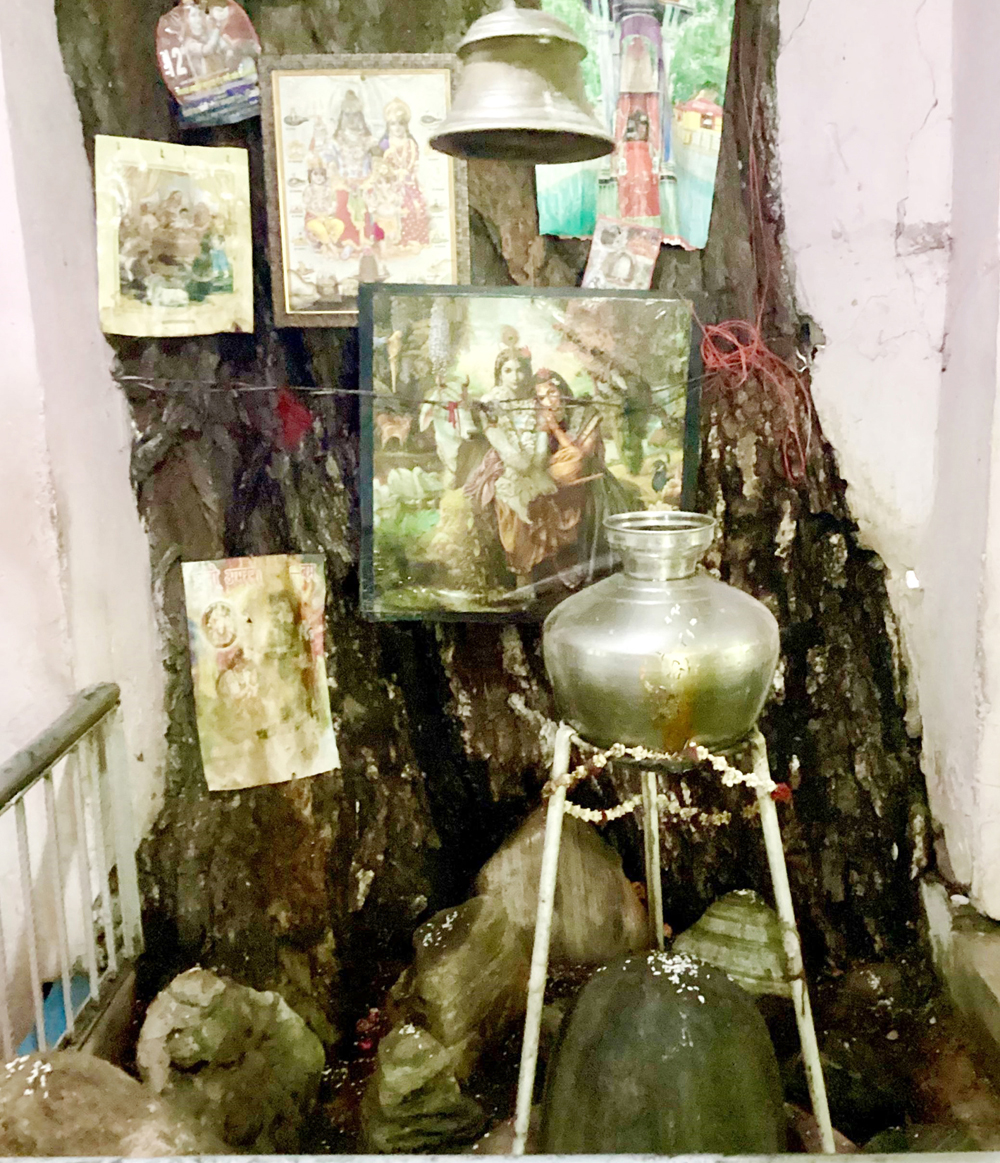
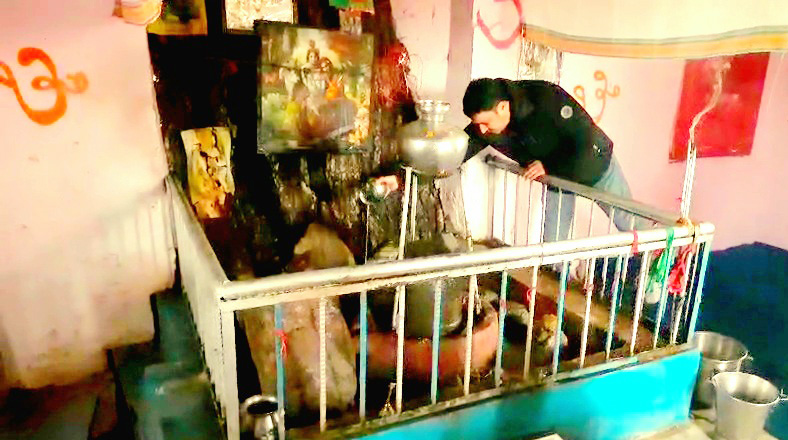
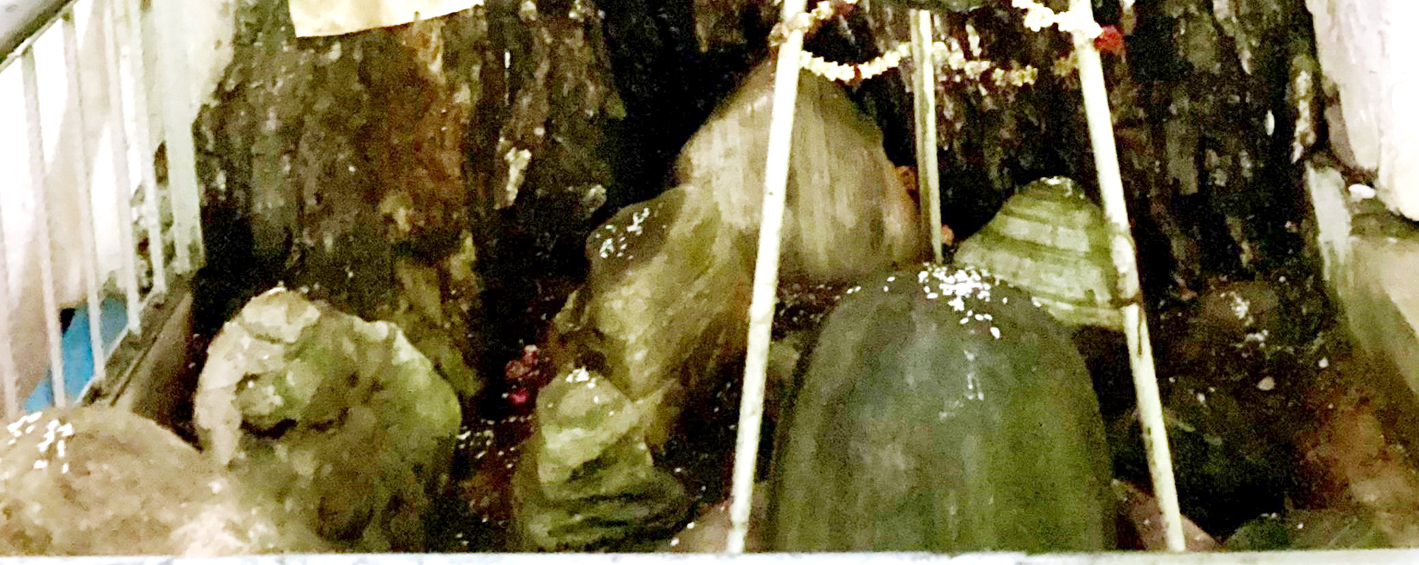
His temple is situated on the main road of Nunar village, coming from Ganderbal towards Sonmarg. Devraz Bhairava is manifested under an ancient huge Brani tree. Devraz Bhairava and other various Shivlings are placed inside the tree hollow at the bottom. There is one Shivlingam which was bought from Shetalnath Bhairava from Srinagar and manifested there. From the trunk of the tree on one side, a roofed temple has been constructed where an ancient Shivlingam is worshipped. It has a small stream known as gam koll flowing calmly through the temple premises.
Important Day and rituals:
Zang trai, the third day of Navreh is celebrated as his main day. On the day of Zang trai, traditionally, Kashmiri Pandit women visits their parental homes and are worshiped there. They returned with aathhor, Noon (salt), Tchutt, and Atagat— of new dresses and gifts. In our village on the day of Zang Trai new brides along with their families visit Devraz Baharav to seek his blessings. This tradition has fortified the symbiotic relation among the Pandit families in Nunar village since eternities.
All the families bring aulov taher (potato and yellow rice) and charwan taher (liver) which is first offered to birds and animals then distributed as prasadam among the people. It gives me goosebumps when I visualize all the families of my ancestral village gathering together at one place, doing worship of Lord Devraz Bhairava and sharing the prasadam. What a grand view it would have been in those times? And what our generation is missing?
|


 *Robin Koul