A Chapter borrowed

|

|
| A Chapter borrowed short story 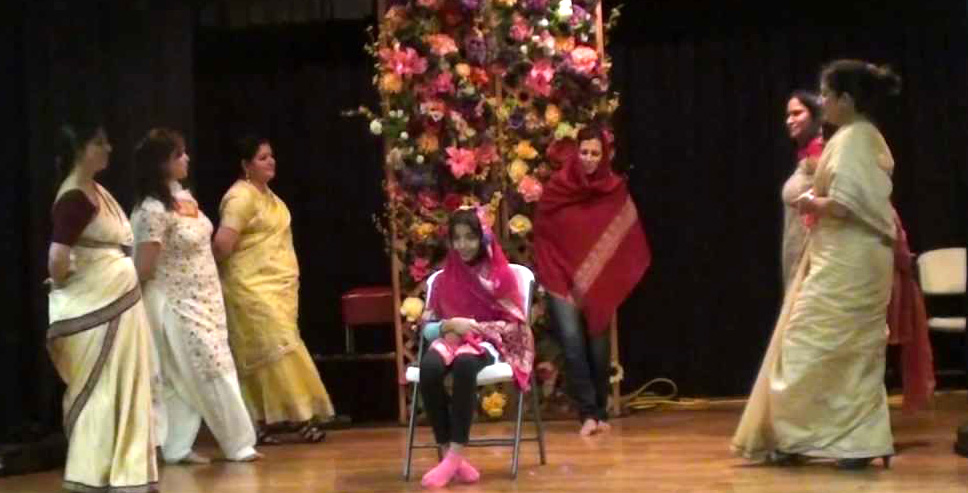
|
| The sun was setting, and a golden trail of light slipped gently through my curtains, painting soft lines on the floor—like strokes of a memory yet to be remembered. I was half-awake, curled into the warmth of my blanket, when I heard the distant wailing of wanwun—that traditional Kashmiri wedding song that tugs at your chest no matter how many times you’ve heard it. “Be chasai khanmaej koor diuv mea rukhsat, myani baba jaano…” (I am my father’s daughter, giving me away, oh my beloved Baba…) The words cut softly, like silk sliding against skin, yet left a heaviness in the air. The melody was coming from just next door—it was Bilkeesa’s wedding day. Our neighbour. The girl who had grown up in the house beside ours, whose laughter once echoed through the lane on summer afternoons. I sat up. My mother had entered the room silently. She stood by the window, her eyes fixed on Bilkeesa’s front yard, where the last light of day fell on a blur of red fabric, marigold garlands, and teary smiles. She didn’t speak—only watched, as if she could see not just the present, but the past folded within it. I studied her face. In a single moment, I saw joy, grief, excitement—and something else, quieter, heavier. A pain she had never named. “Mama, kya chakh sonchan?” I asked softly. (Mama, what are you thinking?) She didn’t turn. Her voice came low, almost to herself. And just like that, the past unfolded. “I was just like Bilkeesa once,” she began. “A daughter—pampered like a delicate phool in her baagh. My baba would buy me joy wrapped in small packets, just like yours does. Chocolates, ribbons, little trinkets from roadside stalls… he knew exactly how to light up my face.” She smiled faintly. “And my maa—if I was late by even a minute, her heart would pound as if something terrible had happened. I too was a khanmaej koor—the darling of my home.” I could see her then: the girl she once was, dancing to wanwun at her cousins’ weddings, dreaming of her own. “Then one day,” she said, “my own wanwun was sung. The same words. The same ache. And I was sent to your father’s house—a place that did not feel mine at first.” Her voice darkened with memory. “It was different there. The walls echoed differently. My mother-in-law was sharp-tongued—not cruel, but tradition lived in her bones. She believed a bride should speak less and work more—zeav chhoti nadi, zeache zyada. I didn’t complain. I cooked. I cleaned. I smiled. And at night, I cried quietly into my pillow.” She sat on the edge of my bed, her hand absently smoothing the blanket. “Then came you—my firstborn, my Himna. I was still studying, still working. I rocked your cradle with one hand and graded papers with the other. I don’t know how I survived those days, but I did.” She laughed softly, though it never reached her eyes. “And then I was pregnant again. With twins.” Her voice trembled. “I lost them both. The pain nearly took me with them. But life doesn’t stop. A year later, I had your sister—Umama. Beautiful as a rose. By then, the whispers had begun.” I knew them well. “‘Only daughters?’ they asked. ‘No son yet?’ As if my womb owed the world an heir. I carried every word like a stone in my chest. But I raised you both with love. I never let the bitterness reach you.” She finally turned to me, her eyes glistening. “And today, when I saw Bilkeesa dressed in red, eyes brimming, face glowing—I saw myself. I saw every daughter who leaves her home believing she is going to another, only to learn it is never quite the same.” Outside, the wanwun rose again—louder now, filled with blessings and pleas for the bride’s happiness. Then she said, softly, like a prayer: Kood yeli aasi tas gasen teli qadr shinaakh lukh milen. (A daughter should only be given away when her new home loves her like her old one did.) The sun had nearly set. Shadows stretched across the floor. Bilkeesa stepped out in red, head bowed beneath the weight of emotion, surrounded by wailing women and men who would not cry in public. My mother and I watched from the window. “Will it be easy for her?” I asked. “Maybe not,” she said. “But every woman learns to carry her story. Some bend. Some break. And some—like me—bloom again.” As Bilkeesa’s car drove away, the wanwun lingering in the wind, I held my mother’s hand. And in that quiet room, filled with fading light and memory, I understood— the story of every daughter is a chapter borrowed from the story of her mother. |
|
|
| *Himma Bashir, |
|
|