UPA's biggest critic: Mahatma Gandhi
 |
|
 UPA’s biggest critic: Mahatma Gandhi Kartikeya Tanna |
|
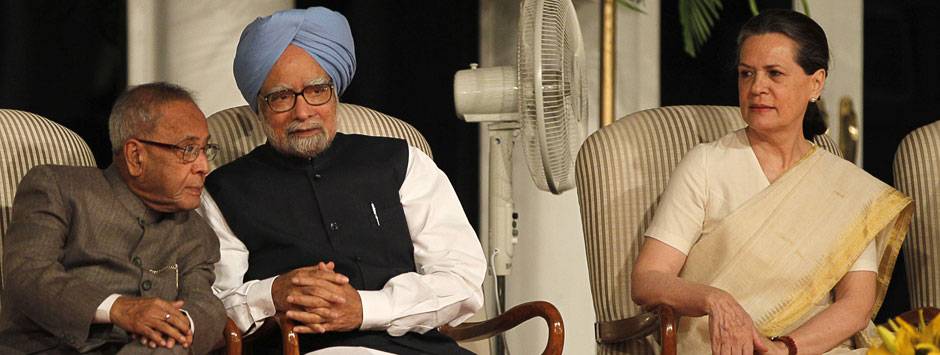 The UPA must learn from its biggest critic - Mahatma Gandhi. Photo Source: Firstpost.com |
|
|
The Mother of Parliaments (a reference to the British Parliament) is like a sterile woman and a prostitute. Both these are harsh terms, but exactly fit the case. The natural condition of that Parliament is such that, without outside pressure, it can do nothing. It is like a prostitute because it is under the control of ministers who change from time to time”.
These are not the words of a living individual agitated at where the UPA has brought the state of affairs to. These remarkably strong thoughts were expressed over ninety years ago by an increasingly important and relevant human being who walked our nation’s soil. Gandhiji’s rather strong description in Hind Swaraj is without knowing or foreseeing the utter helplessness which arises in the present day and age of coalition dharma rendering the Executive and institutions even more docile. He further said, with an alarming degree of prescience: “Parliament is without a real master. Under the Prime Minister, its movement is not steady but it is buffeted about like a prostitute. The Prime Minister is more concerned about his power than about the welfare of Parliament. His energy is concentrated upon securing the success of his party. If they [Prime Ministers] are to be considered honest because they do not take what are generally known as bribes, let them be so considered, but they are open to subtler influences. In order to gain their ends, they certainly bribe people with honours. I do not hesitate to say that they have neither real honesty nor a living conscience.” A question does arise that if Gandhiji had such strong views about the Westminster democracy and government we have in our nation, what were the alternatives he proposed? Essentially, Gandhiji believed that freedom for each individual was the true conception of “freedom” than independence to the geographical territory of the Hind. This, therefore, required a far greater degree of deference and autonomy to the individual than that given today. The individual had to be a proximate architect of his own government. He, therefore, insisted on a highly decentralized system. In political terms, Gandhiji wanted each of India’s 700,000 villages to be organized according to the will of its citizens. Each village would, thereafter, have one vote and would elect district administrations which, in turn, would elect provincial administrations which, in turn, would elect a president, a national chief executive. Centralization, however, was inevitable amid the rising wave of nationalism that erupted in the last decade of the increasingly oppressive and callous British rule and the first few years of the post-Partition independent India where India had to be kept together. Thus began the process of annexation of over five hundred princely states into the Union to form a State. And the Founding Fathers considered the Westminster model most appropriate. Accepting the inevitability of the Westminster form of government, Gandhi made repeated pleas to Congressmen to have grass-root workforces in each community and region to at least ensure the closest possible visibility of the party for the entire nation. As Gandhi himself observed back then – and that is true till date with the latest debacle in Uttar Pradesh – a large number of Congressmen focused on garnering powerful political positions almost as a natural entitlement to their sacrifice for swaraj and grass-root workforces are purposeless. The emergence of regional parties was another phenomenon which has undergone a rather sorry metamorphosis during UPA II. The first decade of independent India saw the nation, by and large, paying obeisance to the central source of authority led by Nehru and Patel. However, fissures in the nationalistic bond started gaining visibility soon thereafter with some regions rejecting aggressive governmental interference in almost every quarter of their lives. This often witnessed bloodshed and gore between an overbearing Centre and belligerent regionalism. Slowly, however, realizing the futility of focusing solely on extending regional rights, most regional representatives have reduced themselves to ambitious aspirants of power. True that Gandhiji’s desire of an individual being closer to his government began to be realized with the emergence of regional parties. However, many responsible for recent corruption scandals as well as stifling major governmental reforms have been regional representatives elected by regional voters for advancing regional causes in New Delhi! And, amid the trading of ministerial portfolios witnessed after each Lok Sabha election, Gandhiji’s villages continue to oscillate between ambitious regional representatives and an indifferent Centre in their struggle for attention. It must be stated, however, that criticizing the Westminster model as a whole would be akin to throwing the baby out with the bathwater. In fact, in the 65th year of independent India, it would be rather impractical. Western-style institutions have played a significant role in increasing a global desirability to engage with India as well as the confidence of foreign entities contributing to the nation’s growth. In decrying UPA’s dismal performance, this crucial role of our institutions cannot be denied. However, given the rather dim reality revealed on the occasion of UPA’s third anniversary, it would do the country (though, perhaps, not itself) a great service by re-reading the Mahatma. Strong and decisive leadership at the top, sole focus on meaningful governance, due deference to federalism and co-option of states, clarity in policies and integrity in dealing with allies is what can begin to restore confidence of the nation in its government. The UPA must begin the process of proving to its biggest critic that if a government has integrity and conviction, India’s choice of her democratic system is insignificant. A few states are already showing it. Posted in: CHRONICLE, MUSINGS |
|
|
|
|
 *Kartikeya Tanna is an attorney by profession and is a partner at Tanna Associates, a law firm in the State of Gujarat. Kartikeya is actively involved in current affairs around the world and has a special interest in politics. He regularly writes articles on laws, finance, politics and economics for various publications. He also maintains his blog at www.kartikeyatanna.com which contains a collection of his writings. *Kartikeya Tanna is an attorney by profession and is a partner at Tanna Associates, a law firm in the State of Gujarat. Kartikeya is actively involved in current affairs around the world and has a special interest in politics. He regularly writes articles on laws, finance, politics and economics for various publications. He also maintains his blog at www.kartikeyatanna.com which contains a collection of his writings. |
|
|
|
|
| Copyrights © 2007 Shehjar online and KashmirGroup.com. Any content, including but not limited to text, software, music, sound, photographs, video, graphics or other material contained may not be modified, copied, reproduced, republished, uploaded, posted, or distributed in any form or context without written permission. Terms & Conditions. The views expressed are solely the author's and not necessarily the views of Shehjar or its owners. Content and posts from such authors are provided "AS IS", with no warranties, and confer no rights. The material and information provided iare for general information only and should not, in any respect, be relied on as professional advice. Neither Shehjar.kashmirgroup.com nor kashmirgroup.com represent or endorse the accuracy or reliability of any advice, opinion, statement, or other information displayed, uploaded, or distributed through the Service by any user, information provider or any other person or entity. You acknowledge that any reliance upon any such opinion, advice, statement, memorandum, or information shall be at your sole risk. |