Accession Day (Velay Divas)

| |

| |
Accession Day (Velay Divas) K L Chowdhury | |
|
| |
 ctober 26, 1947 Jammu and Kashmir acceded to India. Accession day should have been a red letter day in the State calendar, but far from any official celebrations, the memories of the day bring out contrasting emotions in different regions. Officially, the day has been discarded even from memory and buried in an unknown cemetery where no candle is ever lit. Far from being commemorated, 27 October, when Indian forces were airlifted to drive the invaders out from Kashmir, is observed in the valley as Occupation Day.
History: In reality, Accession brought Kashmir back where it really belongs from ancient times. Kashmir has always been a part of India. There is mention in Mahabharata of Kashmir clan—one amongst the many ruling dynasties that comprised different kingdoms in the length and breadth of India. The first known ruler of Kashmir, Gonanda, was related to Jarasandha who ruled Maghadda during Kurukheshtra war. That was around 3000 BC. Emperor Ashoka built the capital of Kashmir at Shringari—from which Srinagar got its name— in 250 BC near the present Pandrethan. The Fourth Buddhist Council was held in Kashmir in Kanshika’s rule around 100 AD. These historical facts negate the theory that Kashmir was a separate country. The Muslims who make such claims came much later. They invaded Kashmir in mid 12th century and changed the demography through conversions under the Turks, Central Asian invaders, Moguls and Afghans. National amnesia: Accession Day has also been conveniently forgotten by the country, because we have made of mess of what was a position of advantage, turning an opportunity into an adversity thorough a series of tactical, strategic and political blunders that continue to exact a heavy price from the nation. We are shy, nay afraid, even to commemorate this day because it might touch the sensitivities of those who have questioned the legality and finality of accession; because our leaders, rulers down the last six decades have complicated the issue through successive political chicanery, thuggery and deceit. Is it not shocking to realize that it took our country 50 years to commemorate the sacrifices of our armed forces who fought the Chinese in 1962 under the most adverse conditions – ill prepared, ill equipped, ill conceived and poorly backed by the county’s political class. . We do not like to recall our blunders, or learn lessons from them. Chronology of events: In fact, the story how accession finally came about—and its aftermath—is replete with faulty visions, miscalculations, missteps, and misadventures that led to a series of tragic events and pushed J&K into the quagmire of a seemingly unending conflict for which the Indian nation has been paying enormous price. Unless and until we understand the genesis of the events pre and post-independence, our understanding of history will remain clouded and we will be unfair to ourselves as well as those who hold contrary views on accession. At the time of Indian independence, India was divided into two sets of territories—one, the territories of British India, which were under the direct control of the Governor-General of India; two, the Princely States, the territories over which the British Crown had suzerainty, but which were under the control of the hereditary rulers of the states. In the independence and partition of British India of 1947, the 562 Princely were given a choice to join either the new Dominion of India or the newly formed state of Pakistan, or to remain independent. Maharaja Hari Singh, who ruled J&K for 22 years and spent much of his time between hunting in the deep forests of the valley and running horses in Bombay Race Course, had little time for a reasoned understanding of the rapidly unfolding events in the subcontinent. He nurtured ambitions of independence, and, alliance with western powers, even with Russia. He was inimical to India especially because he had no love lost for Jawaharlal Nehru for being on the side of Sheikh Mohammad Abdullah in the Quit Kashmir Movement. Yet, he was not totally bereft of common sense to realize that joining Pakistan would be a fatal error. In the third week of June 1947, after the decision was taken to divide India, Lord Mountbatten set out for Kashmir. In Srinagar, the viceroy met the Prime Minister, Ramchand Kak, and advised him to tell Maharajah Hari Singh to accede to either dominion. Ramchand Kak informed him in categorical terms that Kashmir would stay independent. The Maharaja, it is said, avoided seeing Mountbatten, pretending to be down with abdominal colic. On August 15, when India got her independence, Jammu and Kashmir did not acceded to either India or Pakistan. In order to buy time, the Maharaja offered to sign a 'standstill agreement' with both countries. This would allow the free movement of people and goods across borders. Pakistan signed the agreement, but India decided to wait. However, Pakistan stopped rail service between Sialkot and Jammu in the middle of September which blocked the passage of goods through this important route into J&K. The squeeze led to deterioration of relations with Pakistan. We all remember how salt—amongst other necessities of everyday existence—became scarcer than precious stones in what goes down in Kashmir history as the ‘salt famine’ Pakistan soon grew impatient. On October 22, 1947 a five thousands strong group of tribal raiders, backed by Pakistani forces, led an incursion into the State of Jammu & Kashmir from Abbottabad, marching swiftly down the Jehlum valley. They took Dommel on the first day and overpowered the Maharaja’s battalion at Muzaffarabad. Soon, Uri fell to the invaders in spite of meeting a fierce resistance from state troops under Brig. Rajinder Singh, whose ranks were sorely depleted by the desertion of many of its Muslim troops some of whom joined the invading forces. Baramullah fell next and the rampaging hordes looted and burnt down properties, killed innocent people, raped women and took hostages. They damaged and shut down the Mohura power station plunging Srinagar into darkness, and marched rapidly to get within the outskirts of the capital. Some of us still remember their dance of death and destruction with horror. Maharaja Hari Singh woke up from his reveries when the invaders reached the gates of Srinagar. He was forced to appeal India for help. That would come only after accession. On 26 October he signed the instrument of accession. The Indian forces were airlifted from 27th October and soon pushed the invaders out from the city. However, it was going to be a long and protracted war, spread over many months in many sectors across Kashmir, Jammu, Ladakh and Kargil, Poonch and Rajouri. India took the issue of Pakistani invasion to the United Nations on I January 1948. A year later, on 31 Dec 1948, a cease fire brokered by the UN was put into place. By that time nearly two-fifths of the territory J&K were in Pakistan’s control. The UN resolution required Pakistan to withdraw all forces from J&K, allowed India to maintain minimum forces to preserve law and order, and, after compliance of these conditions, to hold a free and impartial plebiscite to determine the future of the state. Thus a case of aggression by Pakistan was converted into a dispute. Pakistan; the aggressor became a stakeholder in Kashmir. The rest is history. The Instrument of Accession: The Instrument of Accession is a legal document executed by Maharajah Hari Singh, ruler of the princely state of Jammu and Kashmir, on 26 October 1947. By executing this document under the provisions of the Indian Independence Act 1947, Maharajah Hari Singh agreed to accede to the Dominion of India. There was no ambiguity in its being unconditional and final. Fundamentally, there is no question about the legality or finality of accession. One, it was signed by a ruler of the princely state as with all the other princely states according to the conditions laid down for partition of India. Two, the first J&K Constituent Assembly, duly elected in 1951, unanimously endorsed and ratified the state's accession to India on February 15, 1954. Three, J&K adopted its own constitution in November, 1956, re-iterating that “The State of Jammu and Kashmir is and shall be an integral part of the Union of India.” Then what went wrong? Blunders: Five blunders look us in the eye:
De-accession, Separation and India’s climb-down: | |
|
| |
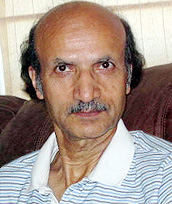 **Dr. K L Chowdhury Dr. K L Chowdhury retired as a Professor of Medicine, Medical College, Srinagar. Presently he is the Director of a charitable institution, Shriya Bhatt Mission Hospital and Research Center, Durga Nagar, Jammu.
He is a physician and neurologist, a medical researcher, poet, social activist. He writes on diverse subjects – medical, literary, social and political and has numerous research papers to his credit, his pioneering work being “The Health Trauma in a Displaced Population” which was presented at national and international conferences. He has published three anthologies namely: 1- “Of Gods, Men and Militants”. Minerva Press (Pvt.) India -2000 2- “A Thousand-Petalled Garland and other Poems”. Writers Workshop Kolkata – 2003 3- “Enchanting world of Infants” Peacock Books, Atlantic Publishers and Distributors-2007 He was declared Shehjar's 'Kashmiri Person of the year' for 2007. | |
|
| |
| Copyrights © 2007
Shehjar online
and
KashmirGroup.com
. Any content, including but not limited to text, software, music, sound, photographs, video, graphics or other material contained may not be modified, copied, reproduced, republished, uploaded, posted, or distributed in any form or context without written permission.
Terms & Conditions.
The views expressed are solely the author's and not necessarily the views of Shehjar or its owners. Content and posts from such authors are provided "AS IS", with no warranties, and confer no rights. The material and information provided iare for general information only and should not, in any respect, be relied on as professional advice. Neither Shehjar.kashmirgroup.com nor kashmirgroup.com represent or endorse the accuracy or reliability of any advice, opinion, statement, or other information displayed, uploaded, or distributed through the Service by any user, information provider or any other person or entity. You acknowledge that any reliance upon any such opinion, advice, statement, memorandum, or information shall be at your sole risk. |